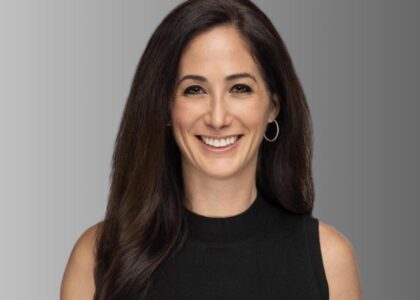
An Interview with Emily Brundige
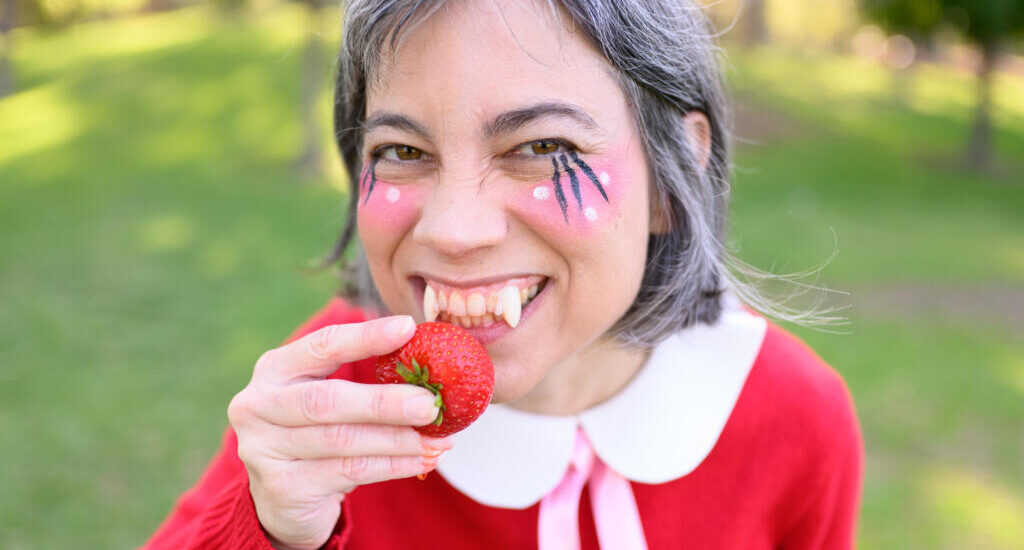
Creator of Strawberry Vampire
For years, Emily Brundige did everything the traditional animation industry asks you to do. She sold shows to Disney, Nickelodeon, Cartoon Network, and Netflix. She served as head writer on the Emmy Award-winning series Hilda and later on Big Nate. She even created Goldie, which began as an independently produced short before becoming an Apple TV+ series.
Then the animation industry changed.
Instead of waiting for another greenlight, she built her own audience. Through Kickstarter, YouTube, and a growing community of fans, Emily is proving that creators can build an animation ecosystem long before a traditional studio says yes.
For those who aren’t familiar with you, tell us a little about your background.
I’m a writer, creator, and showrunner working primarily in kids animation.
I actually got my start on YouTube with a show called Pubertina for Smosh back in the early YouTube days. That opened the door to pitching original series to studios and eventually writing for Disney, Nickelodeon, Cartoon Network, Netflix, and others.
A lot of my career has been spent developing original animated series. I was head writer on Hilda, which won an Emmy, and later Big Nate. Then I independently produced a short called Goldie because I had spent so many years developing projects that nobody ever got to see.
I submitted Goldie to festivals, won several awards, then used it as proof of concept to pitch Apple. It became a series on Apple TV+, and it was nominated for two Emmys, including Outstanding Writing.
Then the animation industry crashed along with much of the rest of entertainment. I started thinking less about surviving inside the system and more about building something outside of it.
Is that what led to Strawberry Vampire?
Exactly. I realized the thing I missed most was creating something that truly belonged to me.
Strawberry Vampire is inspired by my own family. My grandmother and several relatives survived the Holocaust. My grandmother survived Auschwitz with her mother and sister before eventually immigrating to Southern California.
Since they’re Hungarian, vampires became a natural metaphor because everyone in my family basically had Dracula accents growing up.
Instead of blood, I chose strawberries because I wanted it to feel sweet, accessible, and welcoming rather than scary.
The main character was inspired by my mother’s cousin Marika, who came to America when she was eight years old.
That became the pilot I wanted to bring into the world.
How did you fund it the first time?
Through Kickstarter. I intentionally kept the first campaign small because nobody knew what Strawberry Vampire was yet. I set the goal at $8,000 knowing I could call in favors from friends I’d made throughout the animation industry.
Most of the budget went toward my storyboard artist because she carried the bulk of the production.
We ended up raising around $10,000, and we actually reached our goal in about three days. That gave me confidence there was real interest.
Then you launched a second Kickstarter. What changed?
This time I wanted to be much more strategic. Before launching, I spoke with someone who had a lot of Kickstarter experience. The best advice they gave me was to build an email list first.
Instead of asking people to back the project immediately, I asked them to join a mailing list if they thought they’d want to support the next Strawberry Vampire Kickstarter.
I told myself if I could get around a thousand people interested, I’d move forward. We ended up with roughly 1,500 signups.
Those people had already raised their hands and said they wanted to support the project, so the conversion rate would be much stronger than simply relying on random YouTube viewers.
The campaign ultimately raised about $42,000.
That funding is paying for two additional episodes, and the first one releases on YouTube August 15.
What advice would you give someone who’s never run a Kickstarter before?
Build your community long before you ask for money. If you can’t afford to produce your full project yet, introduce your world in other ways.
We created one panel comics introducing the characters. They performed much better than my normal posts on Instagram and helped people become familiar with the world.
Do interviews. Share your characters. Share your ideas. Find creative ways to introduce people to your universe before you ever launch the campaign.
One thing that surprised me is your audience actually preferred more animatics instead of a fully animated pilot.
That surprised me too. YouTube actually released research showing that a large percentage of animation viewers regularly watch animatics and don’t mind them as the finished experience.
That completely changes the economics. Animation is expensive because animation itself is expensive.
If audiences are willing to fall in love with great stories before everything is fully animated, creators no longer have to raise massive budgets just to prove their ideas work.
Do you think audiences care less about polish today than they used to?
I think animation culture has changed. A lot of younger audiences grew up watching creators like Jaiden Animations and other storytelling channels.
People are comfortable watching rough sketches, storyboards, and works in progress.
It really comes down to whether the story is compelling. Do I want to spend time with these characters? Is the storytelling engaging?
That’s become the foundation, and I really appreciate that shift.
Is your goal still to make Strawberry Vampire into a traditional animated series?
I honestly don’t think that way anymore. Sure, I’d love to make a fully animated series because creatively that would be incredibly satisfying.
But that’s no longer the only goal. Now I think about building an ecosystem around Strawberry Vampire.
That could include graphic novels. Video games. Animation. Books. Whatever best serves the world and the audience.
I don’t think entertainment works the way it used to. People watch differently now. Even in my own house, my husband and I mostly watch YouTube.
We’ll subscribe to a streaming service if we hear something amazing, but we’re much more selective now.
The industry broke itself into all these separate platforms, and now everyone’s trying to piece it back together.
Meanwhile, creators have an opportunity to build something entirely new. That’s the part that excites me.