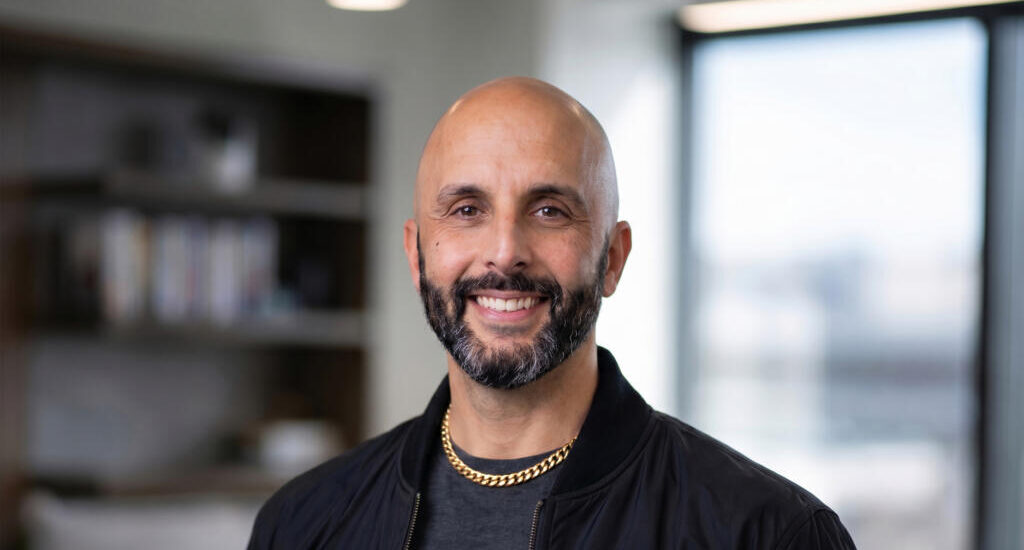
An Interview with Michael Graterri
Founder of Scout24 /Creator24
Most creators are still hunting for brand deals the hard way. Endless LinkedIn searches. Random newsletters. WhatsApp groups. Cold outreach. Guesswork.
Michael Gratteri & Rahul Moudgil built Scout24 to change that.
The platform gives creators, managers, and agencies access to live campaigns, verified brand contacts, and outbound sales signals all in one place. Instead of hoping brands magically discover you, Scout24 helps creators find companies that are already spending money right now.
For those who aren’t familiar with Scout24, what exactly is it?
Scout24 is a platform you use to kick out the guesswork and manual processes around outbound sales. Even the largest agencies can’t rely on inbound anymore. At most, if they’re lucky, maybe 50% of their business is inbound. The rest has to come from somewhere.
When you get on the platform, you can find anywhere between 500 to 1,000 live signals from campaigns that are already running, plus 300 to 500 campaigns you can directly apply to. We make the outbound sales process much easier from beginning to end through finding campaigns and then reaching directly out to verified brand contacts.
For people who are brand new to this world, can you explain what makes Scout24 different from just searching around online for opportunities?
Right now, creators and talent managers are jumping from platform to platform trying to find deals. They’re spending hours on LinkedIn, newsletters, WhatsApp groups, all these different places.
What most people don’t realize is there are actually 20 to 30 different sources out there to find open campaigns. We’re bringing all of that into one platform through our technology.
Some of those signals tell you how much a brand is spending on a campaign and what the metrics look like. That gives you ammo to go after a brand and say, I have a creator who can do just as good or better than those metrics for around the same budget.
We also have a sales team that goes outbound and gets deals directly from brands. Plus inbound comes in from my LinkedIn posts and network as well.
So there really is money available for creators right now?
Absolutely.
It’s much more competitive than it was five years ago though. Back then, inbound probably handled 80% of the deal flow. Now there’s so much competition. It’s not hard to find a beauty influencer with a million followers anymore. There are plenty of them.
Because there’s so much competition now, creators and agencies have to go outbound and build relationships much more aggressively than before.
What if somebody doesn’t have millions of followers? Are there opportunities for smaller creators too?
Absolutely. On our platform you’ll find opportunities for nano, micro, mid-tier, and macro creators.
Nano is usually under 10,000 followers. Micro is around 10,000 to 50,000. Mid-tier is roughly 50K to 500K. Then macro is 500K plus.
Brands care more about engagement than follower count. They’d much rather work with somebody who has incredible engagement and 100,000 followers than somebody with 300,000 followers and weak engagement.
The more a creator aligns with the actual brand, the better. If a creator is known for purses and has strong engagement around purse-related content, and the brand sells purses, that’s probably going to be a hit.
A lot of people in our audience work in scripted storytelling, animation, comedy, or fictional character content. Are there opportunities for those creators too?
Absolutely.
I’ve had production companies reach out to me that have tens of millions of followers doing short-form drama series content. There are all kinds of opportunities now, from nano creators just starting out all the way to major production companies doing short films and scripted content.
What about animated characters specifically? Could a Claymation character or hand-drawn animated world eventually land brand deals too?
Most definitely.
If you have content getting the engagement brands want and it matches their ethos, why not?
That’s why you’re seeing AI creators taking off right now. There are going to be brands that don’t want to work with AI creators because they feel it’s not authentic. Then there are other brands where that won’t matter at all.
Same thing with animation or stop motion. As long as you have a platform that helps them reach their goals, why wouldn’t they work with you?
Which social platforms matter most to brands right now?
By far the top two are Instagram and TikTok. That’s what brands care about most right now.
YouTube is very important too, especially for long-form content. If you’re a gaming creator, YouTube might actually be stronger than TikTok or Instagram for you.
Those are definitely the top three.
What kind of money are creators actually making from these opportunities?
On our starter version of Scout24, you’ll see opportunities ranging anywhere from about $500 to $5,000 per post.
Then you can have recurring opportunities monthly. So if somebody is making $5,000 a month from one partnership, over a year that’s $60,000 from a single brand relationship. Once we have our advanced version released there will be tens of thousands of signals. This is where the big money of $10,000 per post + comes in.
The biggest mistake creators make is thinking about it as one-off posts. You want long-term partnerships that actually make sense for your audience and where you can consistently get the brand results.
That repeat business is really the name of the game unless you’re some mega celebrity influencer where one post pays enough for five years.
Does Scout24 help creators with outreach and strategy too, or is it mainly a tech platform?
Absolutely. We do.
It’s mainly tech, but I also provide one hour of consulting every month at no additional cost with the subscription. I have more than 20 years of outbound sales experience in entertainment and tech, so I’m there as a resource too.
How does somebody get approved for the platform?
Right now it’s invite only because we want to make sure we have the right users on the platform and the right ratio of campaigns to users.
There’s a pretty straightforward process where either myself or somebody on my team gets to know the creator or manager first, and then if approved we send out an invite.