An Interview with Anuj Gupta
Entertainment Attorney, WADR Law
Imagine spending months creating a film with AI, finding a distributor who loves it, and then discovering you may not actually own some of the characters you've created.
That's one of the legal challenges entertainment attorney Anuj Gupta is helping filmmakers navigate. And the stakes are getting higher. Some studios are now requiring producers to use AI while simultaneously cutting their production budgets.
Gupta, who has spent the past decade working with filmmakers, producers, and creative entrepreneurs, believes AI is here to stay. But he also believes creators need to understand what they're giving up when they use these tools. We talked about copyright, chain of title, studio distribution, AI generated characters, music, and the legal mistakes that could make an otherwise valuable project difficult to sell.
We met when we were speaking together at Gotham Week. One of the things I appreciated was how approachable you were about AI and how artists can use it. What's your passion for entertainment, and why are you so interested in this topic?
I've always had a passion for entertainment. That's one of the reasons I became an entertainment lawyer.
Growing up, I was fascinated by how you could transport yourself into an entirely new world. I understood it was all fake, but Hollywood made everything look so real. And people created that.
So I pursued entertainment law because I wanted to learn how this world works, how you raise money, what the legal rights and obligations are. I've been practicing in this space for the past ten years alongside corporate law, working with creative entrepreneurs, producers, and filmmakers. I actually went to film school before law school because I wanted to learn that side of the business.
With AI, how we look at the worlds we create in film and television is changing. I think that's exciting.
There's excitement and there's also dread. Are we all going to lose our jobs? None of us can read the future.
What I said on that panel, and what I would say again today, is continue to be the asset that everyone wants on their team.
That means learning the new technology and having a say in what's happening rather than staying on the sidelines and refusing to participate.
You don't have to be the biggest advocate of AI, but learning it will give you a leg up.
I don't think AI is going anywhere. Some companies may disappear, and there may be a bubble that bursts, but AI itself is here to stay.
Think about whether you could even opt out of AI today. It's in your phone, your text messaging, your social media apps, your email. It's everywhere.
In some ways, it's made our lives easier because we no longer have to do certain mundane tasks.
Now we have to find the balance. There will be a lot of work with policymakers to figure out what that looks like so we don't all lose our jobs in the process.
We have to appreciate and respect AI while understanding the balance between human innovation and creation and the algorithms that are now doing some of that work.
What's the biggest myth about generative AI that you wish you could squash right now, whether someone is an artist or an entertainment executive?
The biggest myth is that it's going to completely get rid of all our jobs.
I just don't think that's going to happen. Maybe I'm naive. Maybe in five years none of us will have jobs. But I don't think so, because ultimately, as humans, we crave connection.
I don't think a robot or an AI algorithm is going to give us that. We've made movies like Her about it, which was a very good movie, but I don't foresee us collectively losing our jobs in the near future.
There was an interesting example in China. A completely AI generated movie came out. It looked beautiful, like a $200 million action film, even though I believe the budget was around a million dollars.
But it wasn't successful at the box office.
Around the same time, there was another animated movie made by a mother and son. It was lower budget, and you could tell they'd really worked on it themselves. That movie topped the box office.
The AI film reportedly made something like $80 per theater despite being released in hundreds of theaters.
I think that says something about human creation and innovation.
People appreciate the humanness of a project, even when it isn't perfect or glossy like a big budget Hollywood film.
I remember watching the AI film's trailer and seeing a character whose face looked fake. The facial structure and coloring were off. It was supposed to be an emotional, sad moment, but I lost my connection to the story.
That's what I mean about human connection.
And the same principle applies to my own profession.
There's been a lot of news about legal AI and how everyone can draft their own contracts.
I tell my clients that if they want to use AI, they should. It's a fantastic educational tool.
If you have a contract and don't want to spend money on a lawyer immediately, I understand putting it into AI and asking it to identify potential problems.
I actually think it's fantastic that clients are coming to us much more educated than before.
The problem is when somebody takes that information and decides they know more than a lawyer.
I could put my medical reports into AI and learn everything about them. That doesn't make me a doctor.
Lawyers provide additional insight and analysis from years of training and experience.
AI might give you a technically perfect answer, but for your circumstances, your industry, and the context a lawyer understands, it might be completely wrong.
Things are going to change, but I don't think our jobs are disappearing forever.
What types of clients do you work with? Are they filmmakers, producers, studios, or talent?
Most of our clients are filmmakers, producers, and talent.
We usually represent them on the filmmaker or production company side, and then we work with studios or financiers on their behalf.
Often, we'll start working with somebody very early in the process, sometimes before they've even incorporated a company.
We'll help them with incorporation, financing documents, and eventually, once they've raised enough capital and are ready to begin, we'll handle production counsel work and everything that follows.
So we're usually working with the filmmaker throughout that process.
When you're dealing with studios, are they becoming more accepting of films made partially or primarily with AI?
I think the answer is a little different.
What I'm seeing is that they're asking filmmakers to disclose whether AI was used.
I haven't necessarily heard studios coming out and saying they're completely accepting of AI, but they understand it's being used.
They want a disclaimer or an outright declaration that AI was involved. If you don't disclose it, you could get into trouble.
The other interesting thing I'm seeing is that some studios or financiers are actually requiring productions to use AI.
They're lowering the rates on a per episode basis, but they're also telling producers they must use AI because they want to test working with production partners who are incorporating it into their process.
So you might have a project that previously had a $300,000 budget per episode, and now they're saying you can do it for $150,000 because you're using AI.
That's something I've actually seen.
There's a belief in some AI filmmaking communities that if you create a film using AI, no Hollywood studio will touch it and you won't be able to distribute it. Is that true?
I don't think that's true.
AI is certainly okay to use. The important thing is disclosing it, being upfront and forthcoming rather than hiding it.
It also depends on how much AI was used and what it was used for.
Using AI in postproduction is different from putting your entire storyline into AI and having it write your script.
I think AI is going to be more accepted in certain parts of the industry than in others.
There's a term filmmakers hear a lot when they're trying to sell or distribute a project, and that's chain of title. Explain what that means in plain English, especially for someone using AI.
Chain of title is probably one of the most important concepts a filmmaker needs to understand.
It means that from the inception of your concept all the way through distribution, somebody can look at your legal documents and identify who owned the project at every stage.
For example, I create a project. Then I transfer those rights to my LLC. Eventually, that LLC might be purchased by a distributor or license the project for distribution.
You need a clear chain showing how those rights moved from one party to another.
If you're adapting a book, you may have the author, the publisher, a production company, a separate entity created specifically for the project, and eventually a platform like Netflix or HBO.
That's potentially five different parties involved in the ownership or licensing of the project.
You need documentation showing that at every stage you received the appropriate rights to produce, distribute, market, and otherwise exploit the project.
If something is missing, selling or licensing the project becomes very difficult.
The platform is going to worry that somebody in that chain could come back and sue because the proper rights were never transferred.
Nobody wants to get stuck litigating that.
With AI, the additional issue is understanding which platform you're using, what its restrictions are, whether you're using the free or paid version, and what you're putting into it.
Generally, I wouldn't recommend putting your entire script into an AI platform just to get feedback or identify problems.
You might put in a high level logline or a paragraph about the project and ask for guidance.
But putting the full script into an AI system can potentially raise concerns about ownership and chain of title.
If you do use AI, be very clear about what you entered into it.
If a distributor asks whether you used AI during the filmmaking or writing process, you should be able to explain exactly what you did.
You might say, yes, I used these prompts, but I didn't put my script into the system. I only asked certain questions.
That way, if any chain of title questions come up, you have documentation.
Let's say I'm creating an animated series and I design a character using Midjourney, ChatGPT, or another AI image generator. Even if I wrote the screenplay myself, do I actually own that character?
There are a couple of concepts here.
The U.S. Copyright Office has essentially said that if something isn't created by a human, that AI generated material isn't protected as human authorship.
So if ChatGPT creates a character, you don't automatically own the copyright in that output.
Some clients have asked, what if my prompt is extremely descriptive?
What if I describe every detail so precisely that the AI is essentially translating what I've written into an image?
Is that protectable?
That's still in flux, but I would argue no, at least with respect to the AI generated output itself.
The written description you created might be copyrightable, but the image produced by the algorithm is a different question.
So you could have this strange situation where you own the written description of a character but don't have copyright protection over the AI generated image.
You might have described the character as having a scar on his forehead, wearing glasses, being five feet eight inches tall, and wearing a robe to school.
Your original written expression may be protected, but that doesn't necessarily mean you own the AI generated visual representation.
It gets very complicated.
The general position I would take is that if you put something into an AI platform and it generates an output, you should not assume you own the copyright in that output.
What if I draw the original character myself, then use AI to colorize it or add clothing and other details? What do I own in that situation?
You would own the original sketch you created.
But the AI generated additions may not be protected.
Let's say you drew the character and then used AI to colorize it, add a pink sweater, and give it a purple bow tie.
You own your original design, the underlying human created elements.
But you probably wouldn't own the copyright in those additional AI generated elements.
There's also a separate question about whether some of those details would even be copyrightable on their own.
A pink sweater or a purple bow tie might simply be common elements that aren't independently protectable.
That's why it's important to distinguish between the human created material and what the AI generates.
So what is actually copyrightable? A screenplay, a novel, a character sketch, music?
The general principle under copyright law is that original expression created by a human and fixed in a tangible medium can be protected.
That could be a screenplay, a novel, a song, a melody, or a drawing.
If you write something yourself, you generally own the copyright in your original expression, subject to any agreements or other applicable rights.
But there's another issue filmmakers need to understand, and that's work for hire.
Let's say you hire a friend to help write your screenplay.
You pay that friend $10,000, but you never sign an agreement transferring the rights.
You might assume that because you paid for the work, you own it.
That isn't necessarily true.
Your friend may still own the copyright in the material they created.
You could argue that the intention behind the payment was to transfer ownership, but why put yourself through that?
Just have a written agreement that clearly establishes the work for hire arrangement or transfers the appropriate rights.
You're going to need that documentation for your chain of title anyway.
Let's talk about music. If I write the melody and lyrics myself, then use something like Suno to generate the vocals and orchestration, what do I own?
First, I want to make clear that everything we're discussing is legal information, not legal advice. This is for informational purposes.
I haven't had the opportunity to review all of Suno's terms of service in detail, but I did look at some of them because I thought you might ask this question.
From what I saw, when you submit content to Suno, you're granting the company and its affiliates a very broad license.
The language includes rights to use, reproduce, store, modify, distribute, create derivative works, perform, display, communicate, and otherwise make the content available.
It also includes language about sublicensing, assignment, and perpetual, irrevocable rights in connection with operating, promoting, monetizing, and improving its products and services.
That's a lot of rights.
Now, I would need to review the entire agreement properly before giving a definitive interpretation.
The platform might say you own the output, but at the same time, you're granting the company broad rights to use the material.
That's something creators need to understand.
If you've written an original song, including the melody and lyrics, you should be very careful about putting that material into a platform without understanding the license you're granting.
The free and paid versions of these services can also have different restrictions and rights.
My advice would be to review those terms carefully before uploading anything valuable.
Based on my very quick review, I personally wouldn't put something into Suno without first understanding exactly what rights I might be granting.
So much has changed in entertainment, especially with generative AI. Where do you think the industry will be in the next three years?
I think AI is going to take over a lot of the conversation in our industry, and it's going to become a much bigger part of how we work.
But I don't think we're suddenly going to have nothing but AI generated films and television shows that everybody loves.
I think AI will be used to lower budgets and increase efficiency.
For example, look at name, image, and likeness rights and voiceover work.
You might have an actor who previously needed to spend an entire week in a recording studio.
Now perhaps you can record what you need in two days and use that material to generate some of the additional work.
That could reduce talent fees, which may hurt some performers.
But at the same time, production budgets may be getting smaller anyway, and AI might allow those productions to happen at a lower cost.
That could also lower barriers to entry and allow more creators to produce content.
I think AI will be particularly useful in postproduction and digital media asset management, where you're dealing with enormous volumes of files and processes that can be made more efficient.
There are going to be areas where AI helps people do their jobs and other areas where people may lose jobs because of it.
But I don't think everything will become AI generated.
Think about video games. That's an entire industry built around computer generated experiences, and people love it.
But there are also people who don't want that experience. They want to watch real humans doing real human things.
I think AI will become a major part of entertainment, but it won't replace every aspect of it.
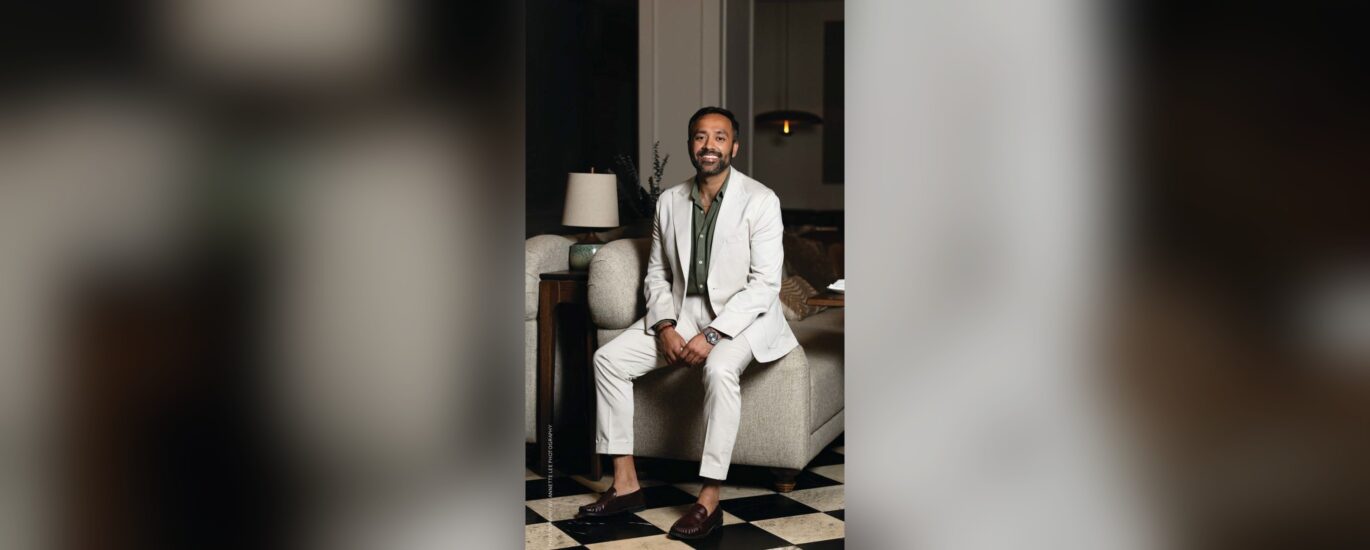
Photography by Annette Lee Photography.