Founder of Insurgence and Architect of the “StudiOS”
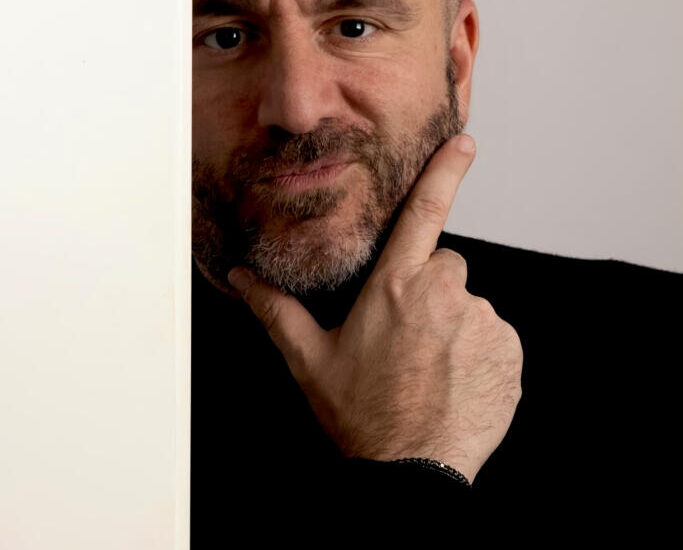
Mario Niccolò Messina doesn’t come from Hollywood. He comes from data.
An Italian technologist who spent years analyzing how people search, stream, and consume video, Mario saw something most studios ignored. Millions of people typing “action movie” or “thriller full movie” into search bars. Not piracy queries. Not brand loyalty. Just confusion. People didn’t know what to watch.
Instead of pitching scripts to gatekeepers, Mario built infrastructure. He founded Insurgence and created what he calls a “StudiOS” — an operating system designed to automate, finance, greenlight, produce, and distribute films using data as its backbone.
In the last 16 months, his company has helped launch nearly 300 movies.
For people who don’t know you, tell us about your background and how Insurgence came to be.
I come from the technology world. My expertise was working with telecom companies, analyzing search behavior and video consumption data.
What I discovered was shocking. Hundreds of millions of searches for very general keywords like “action movie” or “thriller movie.” That tells you two things. One, people don’t know what to watch. Two, there was a massive opportunity.
Years ago, nobody was putting full movies on YouTube properly. And when you search on Google, YouTube is always promoted first because Google wants to sell video ads.
So I started a company originally called V-Channels Media. We distributed movies on YouTube and created channels around them. But what I discovered inside the entertainment industry was something worse than inefficiency.
An epidemic lack of technology.
At every level.
So I asked myself a question. How do you build the next A24 today? In a world where theatrical revenue is down, streaming has disrupted the ecosystem, and mid-budget films barely exist?
My answer was simple. You don’t start with content. You start with the operating system.
That’s how Insurgence and our StudiOS were born.
What exactly is StudiOS?
It’s a fully integrated operating system for the studio of the future.
It has three core pillars.
First, the Filmmaker Lab. Filmmakers submit pitches, track their projects, monitor revenues, see where their films are pitched, access reports, and analyze data.
Second, automation. When a filmmaker submits a pitch, our AI reads it and gives it a score. If it passes a certain threshold, the system automatically generates an offer. If the filmmaker accepts, it automatically sends contracts, tracks production, performs QC checks, and prepares assets for delivery.
Third, distribution infrastructure. If I want to license 200 films in one hour, I can. All assets are organized and deployable instantly.
That’s how we produced nearly 300 films in 16 months.
So filmmakers get financing up front?
Yes. We finance the project. We recoup our investment. Then we revenue share.
But here’s something important. The industry cannot survive on dreams alone. It must be profitable.
If an industry depends entirely on tax credits, it’s not an industry. It’s charity.
We moved from scarcity to abundance. There were once few TV channels, few theaters. Now there are infinite viewing options. That reduces the value of each individual movie.
Filmmakers must understand this reality. Art and profit are not enemies.
You built this from data. Why movies? Why not music or another industry?
Because the data told me to.
Search behavior showed enormous demand for general movie categories. But greenlighting in Hollywood is still largely based on gut instinct.
And let’s be honest. If you have $300 million to invest in one movie, you are not giving that money to a young, unknown filmmaker. And I cannot blame you.
But that system kills the next generation.
It’s like Italy missing the World Cup. Not because talent disappeared, but because we stopped developing new players.
Hollywood stopped developing new filmmakers.
What genres are performing best in your system right now?
Data surprised me.
Horror and thriller were obvious early performers.
But now faith-based films are scoring extremely high. Black-led films are performing incredibly well across genres — action, thriller, horror, sci-fi.
And family films are gold.
Because here’s the uncomfortable truth. We are not making films for audiences. We are making films for advertisers.
Platforms push content that is advertiser-friendly. Gory films full of blood struggle because advertisers avoid them. That reduces impressions. That reduces visibility.
Family films are safe. Safe content gets ads. Ads drive impressions. Impressions drive revenue.
If Procter & Gamble wants to advertise, they’re not placing their ads next to graphic violence.
Filmmakers must understand platform economics.
You’ve said something controversial about representation in Hollywood. Explain that.
What I dislike is superficial representation. Inserting diversity without cultural authenticity is meaningless.
Encanto worked because it was deeply rooted in its culture. That authenticity builds bridges.
When I watch Tyler Perry films, I see parallels to my own family in southern Italy. Cultural specificity creates universality.
That’s powerful.
What about AI? Are you open to AI-assisted filmmaking?
AI as an enhancement tool? Yes. Absolutely.
AI as a one-click replacement for filmmakers? No.
Filmmakers must understand liability. Ownership. IP risk. Consistency. A 90-minute film must maintain continuity at every level. That requires discipline and craft.
AI can help a filmmaker show aliens that previously would have been cut due to budget. AI can elevate production value.
But the magic is human.
If movies become infinite one-click content, the industry collapses. Unlimited supply means zero value.
AI should lower costs and improve quality. Not eliminate creators.
If a filmmaker wants to pitch Insurgence, what should they know?
We are not judging your art.
We are evaluating business viability.
If your project doesn’t fit our model, that does not mean you are not talented. It simply means it doesn’t fit our system.
And my biggest advice?
Don’t listen to Hollywood.
They are not protecting you. They are protecting themselves.
We must become guerrillas. The system changed. If we don’t change with it, we disappear.
That’s the truth.