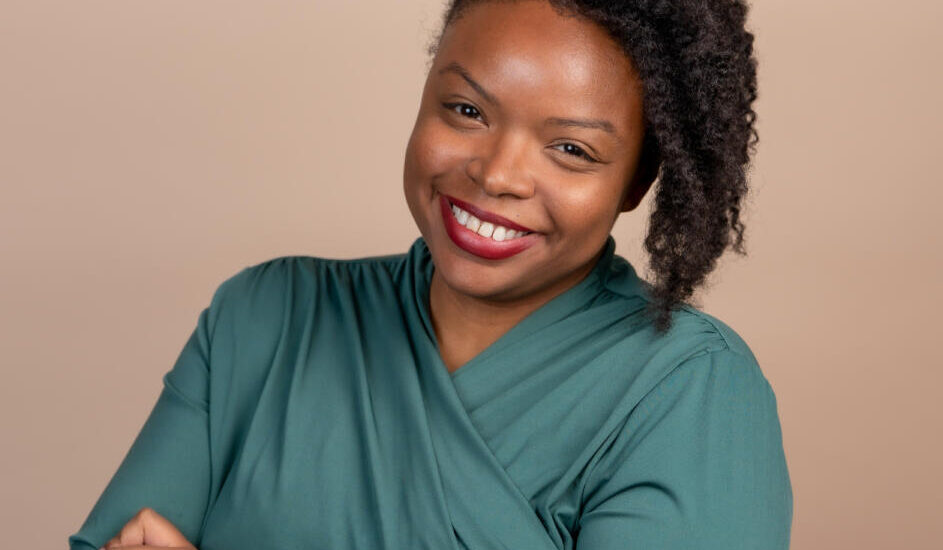
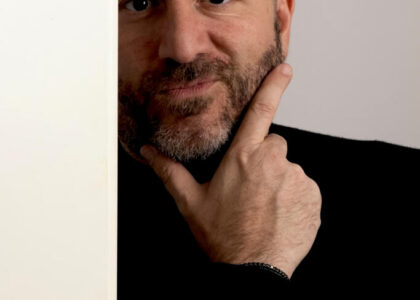
An Interview with Danielle Desir Corbett
Founder, Grants For Creators
Most creators know how to pitch. Most know how to build an audience. Most know how to stretch a budget until it hurts.
What they often do not know is that there is actual money sitting out there for them.
Not loans. Not investors. Not brand deals.
Grants.
Danielle Desir Corbett built her entire business around helping creators find them, understand them, and actually win them. And for filmmakers, animators, music composers, podcasters, journalists, photographers, and other creative people trying to fund the next project, that changes the conversation fast.
For people who are not familiar with you and what your business is, tell us.
I’m a former grants administrator. I used to work at a top medical school in the country helping physicians and researchers find and apply for really large-scale federal government and foundation grants.
So I think my superpower comes from corporate, actually, from knowing that grants exist and then translating that years later.
In 2022, I quit my job and decided to go full time with Grants For Creators, which is a grant discovery platform where we find and curate funding opportunities specifically for creators.
And creators is a broad umbrella. That can mean podcasters, journalists, photographers, filmmakers, authors, poets, video creators. It’s broad. These people are often left out of the non-dilutive funding conversation because we’re not brick-and-mortar small businesses and we’re not nonprofits. We’re in this weird middle space.
While I was working in corporate, I was also a travel creator. I had a travel blog and podcast. During the pandemic, there was a lot of money moving around, and I started seeing relevant funding opportunities. I started applying for them. Knowing grants exist in healthcare, I couldn’t believe somebody would want to fund me doing a podcast in my closet.
But I started applying around 2020, and I won four grants back to back.
That was the eye-opening moment for me. There’s money out there, and I cannot unsee this.
So Grants For Creators brought together both worlds, my corporate grant experience and my personal experience as a creator. Since launching in 2022, my newsletter has grown to 20,000 creators across the U.S. and Canada. This is my full-time job now. I find grants every day and share as much as I can that’s relevant to creative people.
A lot of our audience are scripted creators. They’re creating animations, dramas, scripted podcasts, movies. Are there opportunities for them?
Yes, absolutely.
There are craft-based grants. These grants are specifically for filmmakers, documentarians, podcasters. Those are the obvious ones because you see the exact word you’re looking for.
But those craft-based grants are usually only a small fraction of the funding available.
So I always tell creators to take a multifaceted approach. Start with your craft because that’s the most familiar, but then branch out into all the other things you are.
Maybe there are identity-based grants. Maybe you’re a woman, veteran, BIPOC, or a mom. here are also location-based grants based on your city, your state, your region. If I’m a mom, I could apply for mompreneur grants as a scripted podcaster. Once we stop seeing ourselves only through our craft, we open up a lot more possible funding.
We hear a lot of doom and gloom about funding being cut left and right. Are you saying there is actually money available for people?
Yes.
I literally looked at our spreadsheet for the month of April, and we are not done looking yet. But for April alone, I’m sharing about $3.8 million in grant funding across maybe 130 grants.
And April is not even considered high-grant season. Usually Q1 is very high. Things are only just starting to slow down for May.
There is a lot of non-dilutive money available.
In 2025, with the new administration, there was a lot of talk about federal funding going away. But what I’m seeing in the private sector, foundations, individuals, big businesses doing social impact grantmaking, is that a lot of people are standing in the gap and saying arts matter, creativity matters, and we’re going to fund this anyway.
I haven’t seen a drop. I’ve actually seen an uptick in non-dilutive funding outside the federal space.
Honestly, only maybe 5 percent of the grants I find are federal. Everything else is private-sector funding, and that’s exciting.
Looking for grants can feel daunting, especially for creators who don’t think like grant writers. Walk us through what you actually provide in your subscription and how people can tap into it.
One of the biggest problems is that many creators don’t even know grants exist for them in the first place. They think grants are for healthcare or libraries or nonprofits.
Then if they do go on Google and type in something like “grants for podcasters,” they’ll find a lot of expired listicles and dead ends. That wastes a lot of time.
I always say, even expired grants are useful because if a funder supported something once, they may open again. So I make note of those too.
There are also grant announcements, lists of winners, things that don’t look useful at first glance but actually tell you who is funding what.
So my job is to cut through all of that noise.
Right now we’re on Substack, though we’re planning to leave soon and build our own platform. But the way it works now is that each month we publish a curated list of funding opportunities. There’s an index at the top, so you can quickly scan by category like artists, filmmakers, photographers, and go right to what matters to you.
If you’re a free member, you get access to a handful of grants, usually around five to ten. If you’re a paid subscriber, you get access to the full monthly list and all the archives.
That archive is really valuable because you can go back years and see who has funded what before.
And over the last four years, creators have secured $175,000 in grant funding through the work we’ve done at Grants For Creators. I’m really proud of that.
So this is not just me sending out links. Creators are applying. They are winning. And that creates momentum because when one creator wins, other creators start to believe they can too.
A lot of creators think, okay great, but I don’t know how to write a proposal. What are the key things that need to be in one?
A lot of creators think grant writing is this completely foreign thing. In some ways it is, but in some ways it really isn’t.
We already know how to pitch ourselves. We pitch our audience all the time. We pitch our work. So I think of grant writing as just another way of presenting what I’m doing.
A lot of grants, especially in the private sector, ask the same core questions.
Tell me about yourself and your business.
Tell me about the work you’re doing.
And then tell me about the impact.
Impact is the big one. How are people’s lives changing because of your work? What happens if your work doesn’t exist?
If you can answer those three questions, you’re really just remixing them for each application.
The key difference is that every funder has a different lens. One might care most about community engagement. Another might care about innovation. So your job is to take those same core answers and align them with the values of the funder.
I always use a billboard test. Can me and this funder be on a billboard together in Times Square? If the answer is yes, we’re aligned. If not, I move on.
And I really tell creators not to operate from FOMO (Fear of Missing Out). There is a lot of money out there. If one opportunity isn’t right, or the timing isn’t right, there will be another one.
How long does it actually take to hear back and receive money?
Every grant is different.
I’ve seen decisions come back in as little as a week.Other grants might take a couple months, maybe three months.
I haven’t really seen long year-long processes in the private sector, and that’s encouraging.
Most grant funders will tell you in the funding announcement when you can expect to hear back, so creators should look at that and factor it in if timing matters.
What are the most common mistakes creators make when applying?
One of the biggest mistakes is treating grant applications like a mass-apply process.
If you use one generic template and just blast it out, funders can feel that.
Even though I remix a lot from previous proposals, I customize every application to the specific funder.
Another mistake is sloppy use of AI. I’ve heard funders complain that people are literally copying and pasting prompts into the application. So yes, use tools if they help you, but always reread everything carefully.
Grammar matters. Typos matter. Following the instructions matters. If they ask for a sixty second pitch video, give them sixty seconds. If they ask for two sentences, count the periods.
And the biggest weakness I see from creators is around impact.
A lot of creators explain what they do, but they stop too early. They don’t walk it through to the transformation.
For example, it’s one thing to say I have a podcast about affordable travel. It’s another thing to say my listeners save money, gain confidence, travel longer, experience new cultures, and change how they see the world because of what I do.
There has to be a clear throughline. Your work changes something. You need to communicate that.
Beyond the subscription, can people hire you directly? What other services do you offer?
Yes.
I offer thirty-minute and one-hour strategy sessions, whether someone wants help refining their grant-finding strategy or wants a second set of eyes on an application.
I’ve also been hired on retainer for 1:1 grant finding services, as well as grant readiness assessments and larger-scale strategy work for organizations.