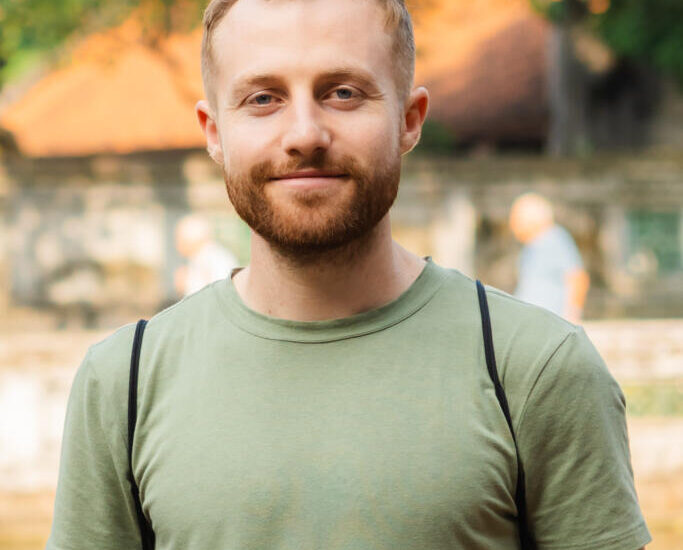
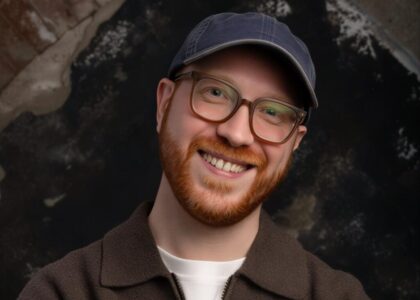
CEO of Telos Media and Creator of SolarBalls
Oliver Gilpin represents a new kind of media founder. He didn’t wait for Hollywood to validate his ideas. He didn’t chase a network deal first. Instead, he built audience, IP, and revenue directly on YouTube, then expanded outward from strength.
Together with his business partner Alvaro Calmet, Oliver has quietly built SolarBalls into a multi-million subscriber animation franchise, generated seven figures in merchandise in 2025, launched the largest original animation Patreon in the world, and moved into global streaming distribution, all without a traditional studio system behind him.
For people who don’t know you yet, who are you and what is Telos Media?
I’m Oliver. I founded Telos Media four years ago in 2021. We’re an IP incubation company focused on building character-led animation on YouTube.
The goal is to create series that are designed natively for YouTube, but structured in a way that they can also live on streaming platforms. We’re now on Amazon Prime and multiple international platforms as well. The mission Alvaro and I share is to continue incubating original IP on YouTube, that can scale into $50M+ franchises, each.
You didn’t start with a company. What was your journey?
I started at 12 years old making videos in my bedroom. I posted hundreds of videos just learning as I went. By 15, I had around 10,000 subscribers, which at the time was strong growth.
At 17, I left school and started my first company, a video editing agency for creators. I told myself I wanted to either be a YouTuber or build a business, so I committed early. That company, it’s called ‘Now Creatives’, grew to about 20 editors and serviced creators and celebrities with outsourced video editing. This production company has post-produced videos with a collective 20 billion views on YouTube.
Once Now Creatives was stable, I reinvested into Telos Media, which focuses on animated IPs that combine both entertainment and education. We didn’t focus purely on entertainment since our mission is to produce content that’s not just fun to watch, but also meaningful. We want to give audiences something valuable they can carry into their lives. We want them to become wiser, more curious, and to think more critically.
Let’s talk about SolarBalls. What is it and how big has it become?
SolarBalls is an animated series where the planets of the solar system are the main characters. They have faces, personalities, relationships. It’s hilarious and action-packed.
We built it almost like a teenage high school dynamic, but set in space. The target audience is 8 to 15 years old, mixed gender.
We’ve produced around 180 episodes over four years, releasing one per week. The English channel has 2 million subscribers, and across language channels we have about5.5 million subscribers globally. And 2.1 billion long-form content IP views. Our show is also available on 36 streaming platforms worldwide, supported by an active and super engaged community across social media and fan spaces like Discord and Patreon.
Beyond that, we’ve built an active and growing merchandise business. Just e also launched trading card game, SolarCards, inspired by collectible battle systems. Our merch generated $1 million in revenue in the past year alone. And that’s direct to consumer, no retail distribution yet.
You’ve built this without a traditional Hollywood licensing structure. Why?
Because we didn’t need it.
Kids today are primarily on social media and streaming, not traditional television. So we focused on mastering YouTube first.
On the merchandise side, traditional licensing can mean giving away three quarters of your margin. Retailers take margin. Licensing agents take margin. Manufacturers take margin.
We realized we could link merchandise directly in YouTube descriptions and sell to our audience directly. That keeps margins high and gives us proven IP demand, and such leverage, when negotiating with retail partners later.
How did you grow the channel from zero to millions? Was it paid or organic?
Fully organic. No paid ads.
We analyze market demand heavily. We study competitors. We reverse engineer view volumes and estimate profitability.
For SolarBalls, we started with short one to two minute videos asking simple educational questions like: “Can life survive on Mars?” That attracted an education-oriented audience.
Then gradually we layered in deeper character development and ongoing story arcs. That expanded into entertainment beyond education.
We launched four brands at the same time. SolarBalls was the one that caught fire. We gained 110,000 subscribers in the first 10 days. Part of that was cross promotion from our existing geopolitics channel, MrSpherical. But much of it was simply that the algorithm responded strongly to space content.
What hasn’t worked?
I’ve spent around $250,000 on channels that we cancelled. We are bootstrapped, so those losses were real.
The biggest mistake is failing to properly evaluate market demand. If you miscalculate competition or overestimate view potential, production becomes too expensive and margins collapse.
Another mistake is going too niche. We made a channel where corporations were animated characters exploring unethical behavior. It was creative, but the audience size was too small.
Creatively, hiring writers who understand traditional screenwriting but can’t adapt to YouTube pacing has also been challenging. YouTube requires different structure and retention awareness.
Now we use a hybrid system. Strong narrative writers paired with platform-savvy consultants who understand YouTube dynamics.
If someone wants to build a sustainable $75,000 to $100,000 per year from a character IP, how big does their audience need to be?
It depends on the niche, but the more important lesson is this.
Social platforms are competitive ecosystems. Margins erode quickly as competition increases. A channel that is profitable at 500,000 views per video can become unprofitable at 250,000.
The key is serialization.
Build a consistent theme or storyline that creates loyalty. Yes, it slightly de-optimizes for casual algorithm growth. But it compounds over time.
SolarBalls became highly profitable because fans were emotionally invested in the storyline.They binge older episodes, discuss theories, wait for releases, and feel personally connected to the universe. That translated into merchandise sales and Patreon support.
We’re currently the largest Patreon in the world for animation. That’s about $20,000 per month. Pure margin.
That level of loyalty doesn’t come from viral one-offs. It comes from serialization and consistent community building.
If I’m your nephew and I want to start, let’s say a “Talking Bananas” cartoon or any other IP, what should I do first?
First, build familiarity with the visual format and characters. Shorts are powerful because they’re easier entry points.
Use interest hooks. Questions work well. Educational curiosity works well.
Then gradually transition into deeper character relationships and ongoing story arcs. Don’t go straight into heavy lore. Ease viewers into it.
Mix content for new viewers with content for loyal fans. That balance builds reach and retention.
Where do you see media in two years?
More IP incubation on YouTube.
YouTube is actively positioning itself to compete with Netflix and Amazon. They’re investing in serialized show features.
We’ll see more Hollywood creators, studios, and independent filmmakers coming to YouTube to validate audience demand first before traditional distribution.
For us, the future is clear. Build IP where the audience already lives. Own the relationship on digital platforms. Then scale beyond the platform once a solid foundation is built.
We’re making a significant investment into a single 22-minute Pilot, that we’ll launch on YouTube in June 2026. We’re bullish on Hollywood IP incubation on YouTube, so reach out if you’re in the business, or a creative visionary, and would like to chat.