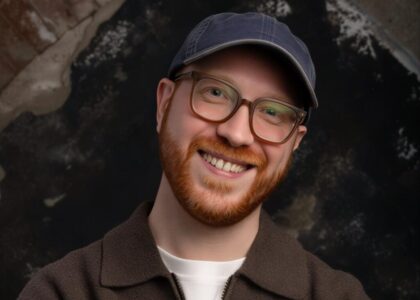
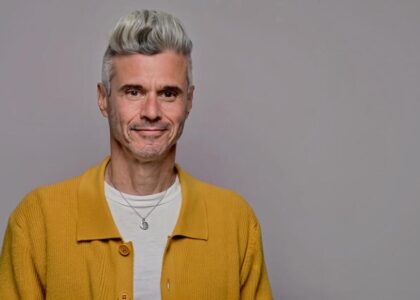
I chatted with filmmaker Daren Smith, someone I’ve been following for a while and quietly rooting for. Daren is based in Utah, but his thinking is global. He’s not waiting for Hollywood to call. He’s building his own system, raising his own capital, and greenlighting his own films with intention.
What struck me most in this conversation wasn’t just the ambition, but the clarity. We talked about storytelling, family films, broken indie models, raising a film fund from scratch, and what it actually takes to do this without pretending it’s easy.
For people who don’t know you, who is Daren Smith and how did you get here?
The long version would take a few episodes, but the short version is I’m an indie film producer based in Provo, Utah. I’ve produced four feature films over the last four years. Before that I did four seasons of television, and before that I ran a small boutique video production company like a lot of people do.
Right now my focus is building a new model for profitably investing in independent film. I created a film fund that’s designed to finance the next slate of movies where I act more as an executive producer instead of being boots on the ground for every project. Over the last year I’ve been raising money. We crossed our first million dollars in commitments in October and greenlit our first film, Brotherhood, which goes into production in April. The goal is three to four films a year moving forward.
At the core, the vision is meaningful media. Movies that spark conversation and change people for the better. Values based, family friendly stories.
What kinds of stories are you most drawn to telling?
I’m what they call an Xennial. Born in ‘83. I grew up on 80s and 90s movies. I’m 42 now and I’m watching those same movies with my kids and they still love them. The Sandlot. The Goonies. The Princess Bride.
I look at the current landscape and honestly, there’s not much for families. Most of what’s in theaters is rated R. I’m not anti rated R, but I don’t love dark, demonic, distressing stories. I don’t go to the movies to feel worse about life.
My wife and I have three boys. If I can make movies for parents in their 40s who love movies and want something they can bring their whole family to, you don’t just get one ticket. You get the whole family. Over time, that builds trust. It builds a brand. Eventually people show up because it’s another Craftsman Films movie, not just because they recognize an IP.
You’re not waiting for studios. You decided to raise your own fund. Why?
Because the indie film model is broken. I lived inside it for four movies and kept asking, why is this so hard?
The traditional model is backwards. You write a script, raise money for one film, make it, hope for distribution, and then hope an audience finds it with almost no marketing budget. That’s not a business model, that’s a hope strategy.
I started breaking it down like an architect. Financing. Development. Production. Marketing. Distribution. Where is it broken and how can I fix it?
On financing, you’re asking investors to bet on one film with no real plan for recoupment. So I asked, what if we spread risk across multiple films instead of one? That gives investors more shots on goal.
On development, indie films barely do it. Instead, they get the money on Friday and start pre-production on Monday! So we built real development time. For Brotherhood, we did eight live readings with the writer director performing the script with live music across three months and three different states. Every reading led to rewrites. The movie got better over months, not weeks.
Marketing starts on day one. If you market early, it’s cheaper and you actually learn who your audience is. Distribution conversations happen before the movie is made, not after. When I call distributors early, they’re shocked. Nobody does that. But they’re grateful, because they can actually help shape the strategy.
That’s why I built a fund to finance a new model. If we keep doing the same broken thing, we’ll keep getting the same results.
For someone who wants to raise money, what does the process really look like?
First, mindset. A fund doesn’t happen because you say you want one. I started talking about this publicly in November 2024. We crossed our first million in October 2025. That was a year of full-time fundraising.
This wasn’t a side project. I spent four to eight hours a day doing outreach. I traveled constantly. I barely made any personal income that year. My wife works full time and supported us through it. That’s important to say out loud. This is a privilege and a sacrifice.
Entrepreneurship is a journey of a thousand pitches. I probably pitched 250 to 270 investors last year and that wasn’t enough. My goal for the first three months of 2026 is another 250. It’s math. It’s reps.
Also, you’re not convincing anyone. If someone gives you money, it’s because there’s already demand. You’re aligning with it, not creating it.
How do you actually find investors and get them to engage?
Two ways. Content and manual outreach.
I publish constantly. I have a podcast, blog, newsletter, and a large-ish LinkedIn presence. People engage and signal interest. I track that. My newsletter has about 4,500 people and a sub list of around 300 investors I’ve met with.
But content alone isn’t enough. The manual side is identifying people with signals. If someone lists angel investor in their bio, I want to talk to them. Most won’t respond. That’s fine.
Communities and connectors matter most. Investor communities. Creative communities. And the people who run them. You don’t chase whales directly. You get introduced by someone they trust. That’s how real conversations happen.
What absolutely does not work when raising money?
Cold copy paste messages. Long pitches blasted to thousands of people. Treating investors like ATMs.
If someone is taking money out of an investment making them 20 or 30 percent a year to give it to you, that’s a huge ask. You’re asking for trust and patience. That’s a relationship, not a transaction.
Also, don’t wait for markets like AFM or festivals. Distributors are busy selling there. It’s the worst time to pitch them. Demand doesn’t only exist at markets. These are just people doing jobs every day. Find them directly.
Have you seen investors motivated by things other than profit?
Absolutely. Some want a family member in the film. Some love the message. Some just want something interesting to talk about at a party.
Years ago I pitched a western to a ranch owner. I asked what he wanted. He said he’d always dreamed of being in the background of a movie on a horse. That’s it. We could do that. He almost funded the whole movie.
You don’t convince people. You listen, and you align with the existing demand.
What would you say to people who feel like this is impossible for them?
Mindset is the issue. Tony Robbins says success is eighty percent mindset and twenty percent tactics. People say I can do it because of X, and they can’t because of Y. That’s the trap.
I’m just some guy from Utah who spent fifteen years forcing his way through this industry. It took me twelve years to produce my first feature. That’s too long. That’s why I wrote my book.
You don’t wake up with a million dollars. You wake up and keep going. I told my wife three months. That became six. Then nine. Then twelve. Now fifteen. I crossed a million, greenlit a movie, and revenue is coming in. That’s why this works.
You have to be relentless. A little unreasonable. Willing to keep going longer than most people are comfortable with.
Where can people learn more about your approach?
I wrote a book about it. You can get it free at craftsmanfilms.co/blockbuster. It’s about how independent creators can build profitable businesses without waiting for permission. For those looking to invest in meaningful media, check out craftsmanfilms.co/fund
Any final words of encouragement?
If I can do this, anyone can. Not overnight. Not easily. But it’s possible. You just have to decide you’re not quitting and then keep proving that decision every day, making progress by doing more of what works and less of what doesn’t.