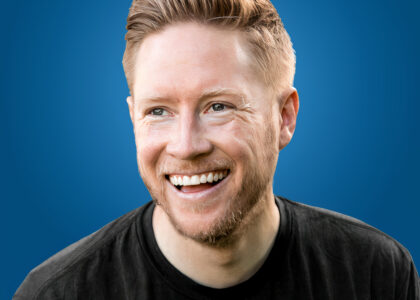
I chatted with filmmaker Kavan Cardoza at a moment when everything around him was moving fast. The kind of moment where momentum is real, but the pressure is too.
Kavan is one of those rare creators who didn’t just use AI to make something flashy. He used it to tell stories. Real stories. Worlds. Characters. Lore. Watching his work, especially Chronicles of Bone, it’s immediately clear this isn’t demo culture. This is filmmaking.
What follows is a wide ranging conversation about building IP with AI, negotiating with studios and AI platforms, developing a shared universe, protecting creative control, and why story will always matter more than tools.
For people just discovering you, who are you and what is Phantom X?
My name is Kavan Cardoza. Online, people know me as Kavan the Kid. That name stuck from when I was a kid and now I’m definitely not one anymore.
I co-founded Phantom X with Mike J. Mitch and SAV. We’re a production studio that traditionally did AI commercials, but also AI films and television. Right now we’re shifting heavily into narrative work.
Before Chronicles of Bone, I worked on some pretty early AI projects. I made Echo Hunter, which was one of the first AI films to make a deal with SAG and star real actors. Then a follow-up, Echo Hunter: A Memory Too Far. I also made a trailer that Elon Musk interacted with that went viral.
At the end of 2025, everything really shifted when I launched Chronicles of Bone. That project is my reimagining of public domain characters like Peter Pan, Robin Hood, King Arthur, Frankenstein, and Dracula, all brought into a single shared universe.
What’s the audience reaction been like?
Honestly, overwhelmingly positive. And I’m really grateful for that.
One thing that excited me was stepping away from sci-fi. The AI space leans heavily into sci-fi, and I did plenty of that with Echo Hunter and even a Star Wars fan film. But with Bones, I wanted fantasy. A post-apocalyptic medieval world.
Fantasy audiences are also very forgiving. They’re used to CG. They care about story. If the story works, they don’t care how it was made.
We’re releasing one episode every month through November. That completes season one. I’ll probably take December off and come back with season two in January 2027.
Walk me through your storytelling process. Where does it start?
The original spark was actually The Collector, my version of Frankenstein. I wanted to completely throw out every traditional take on the character. Most Frankenstein stories always circle back to the same imagery. I wanted something totally new.
That led to the bigger idea. What if Peter Pan and the Lost Boys were dead, and there’s only one Lost Boy left, now an adult? What if Tinkerbell isn’t sweet, but dangerous? That’s when the shared universe idea really took off.
I listen to modern classical music, usually dark and ominous, and just sit with it. I open a Google Doc and start dumping ideas. No structure at first. Just plot points, images, concepts.
At the same time, I research copyright. Everything has to be radically transformed from its original public domain source so it can be protected. You have to trace back to the earliest version of the character and build forward in a new direction.
You make big changes to classic characters. Why?
Because I’m bored of seeing the same versions.
Take vampires. In my world, they can walk in sunlight. They don’t need blood to survive. The real power is control. If a vampire bites you, you’re bound to serve them. It’s mind control. That changes the entire power dynamic.
The only way to kill them is beheading or burning. That creates a real opposition. Then I map the world. Where everyone lives. Who controls what.
A lot of inspiration comes from Game of Thrones and the original Star Wars. Not the aesthetics, but the way power structures and mythology work.
And I’m obsessive about character design. Every single character has to look incredible. No background filler. Everyone matters.
How do you keep characters feeling real over time?
Motivation. Always motivation.
I assign every character a moral compass, a mission, flaws, and breaking points. I let their decisions drive the story, not some pre-planned ending.
That’s where shows usually fall apart. Characters start doing things that make no sense just to move the plot. I don’t do that. I let the characters lead, even if it means killing someone I really liked.
That’s what keeps it honest.
Once the script is done, how do you actually build the show?
I design characters first using real-world elements. Costumes I own. Masks I’ve worn. I photograph myself or reference models and then iterate heavily with AI until the character is right.
Once the final design is locked, I generate every angle. Front. Side. Back. Hands. Shoes. Everything.
Then I build locations. Every wall. Every angle. That way I can move the camera freely like a real set.
Before tools like Nano Banana Pro and newer video models, this required a lot of Photoshop cheating. Now it’s dramatically faster, but consistency is still the hardest part. Multi-character scenes can drive you insane.
I test shots across multiple tools. Each one does something better. I let the result decide which tool I use for that scene.
Do you think sustainable income is possible doing this?
Absolutely. I’m living proof.
I started with fake movie trailers for IPs I felt were mishandled. That led to attention. Then I moved into original IP. Then spec ads. One Nike spec ad alone led to a ton of commercial work.
Our studio did an insane number of commercials last year. National. Global. We were profitable in year one. Year two is already bigger than anything I’ve ever seen in my career.
Most of our work comes inbound. We post something strong and people reach out.
What excites you most about where this is all going?
Storytellers.
Soon, everyone will be able to make something that looks good. That’s already Hollywood. Everything looks good. Most of it still sucks because the writing isn’t there.
Story always wins. It always has.
AI is just letting more people tell stories who were locked out before. And that’s what excites me the most.