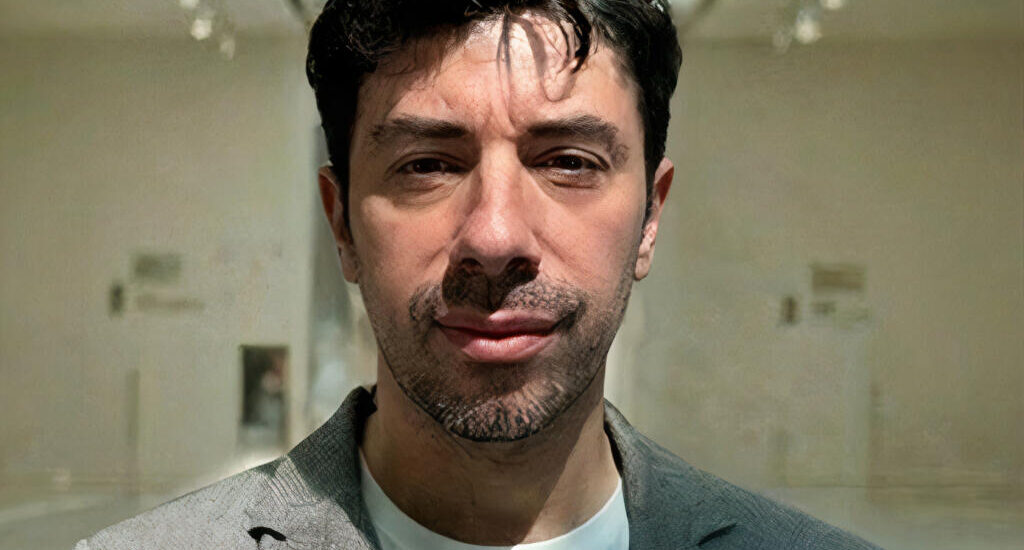
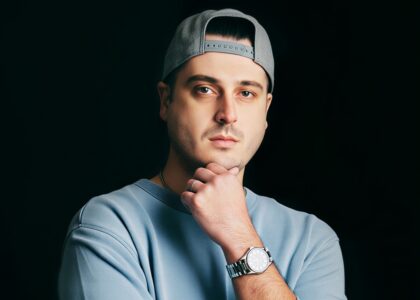
I sat down virtually with filmmaker Emanuele Riccetti after seeing his latest AI-driven short “Vessel” on LinkedIn. I already knew his work, but this one hit different. The storytelling, the shot choices, the emotional build. If he never mentioned AI, I would have assumed he shot it on a RED or on celluloid film.
We ended up talking about craft, AI tools, mistakes, budgets, career shifts, and what it takes to go from washing dishes in London to becoming one of the most interesting voices in this new wave of indie cinema. Here is our conversation.
Where are you from and what is your background?
I am Italian. My wife is Spanish and we live in Spain now. Before that I spent about twelve years in London. My background is in arts and design. After school I worked in a pharmaceutical company for three years, then in finance at Deutsche Bank for two. Eventually life pushed me toward tech. I have been around early AI models for about five and a half years, starting with the first open source diffusion models. That changed everything for me.
How did you become such a strong storyteller without film school?
I do not have formal filmmaking training. I watch a lot of movies. I dream a lot. My son keeps my imagination loose. My arts background helps too. Everything you see from me is just how I feel the story and the flow.
How long have you been using AI in your creative work?
About five years. I started with early models like stable diffusion. Back then it felt magical to see a computer generate something that felt close to art. The pace since then has been wild.
Where do you think AI filmmaking will be in the next two years?
If growth keeps the same pace, it is going to be incredible. So good that we may start craving human mistakes again. Images are already hard to distinguish from real ones. Video is catching up. As the tech improves, competition will get harder. People who build their name now will have a real advantage later.
Do stories still matter in an AI driven world?
Yes. Story has to come from a human mind. Emotion, nuance, meaning. AI should support that, not replace it.
What is your biggest criticism of AI video right now?
Acting performances. They look too exaggerated. You can fix that using motion transfer tools like Wan 2.2. I use them for professional work to bring real actor emotion into AI characters.
The other big issue is upscaling. Veo 3 outputs at 720. When you upscale to 1080 or higher, you get artifacts and lose skin texture. Close ups work. Wide shots fall apart. We need tools that rebuild texture without distorting the image.
In images, tools like Magnific do a great job with precise upscaling. I would love something that strong for video.
Tell us about “Vessel.” What sparked that story?
Google announced a contest in Dubai called One Billion Followers Summit. You have to make a seven to ten minute movie using only Google tools. I had an idea about a future shaped by AI and wanted to explore the good and the bad inside human nature and inside AI. Some things changed as I built it. The mechanical seagull at the end was not in the script at first. Ideas show up while you generate images and shots. That is the beauty of this medium.
What was your step by step process for making the film?
- First I write a clear script and break it into sections, and each section into scenes.
- Then I design characters separately on a white background.
- I build each location and decide the lighting.
- For every scene I generate several angles to keep consistency.
- Then I add characters in the scenes
- Once I am happy with the images, I animate them.
- Because the contest required Google tools, I used Veo 3 only, which was limiting. Normally I use Kling, Veo 3, Minimax, Runway, and a few others.
A few tips people often miss
- Ingredients mode in Veo 3 is extremely powerful. You can place characters and scenes together and get surprisingly coherent shots.
- Multi prompting lets you ask Veo 3 to create multiple cuts and angles from the same setup.
- Veo 3 Fast is underrated. Around half of “Vessel” was done with it. It is cheaper and almost as good.
- You can composite characters and scenes in Photoshop, label each element, then use image to video and ask Veo 3 to place them in the environment and animate from there.
How many attempts does it take to get good shots?
Success is still low. Maybe fifteen to twenty percent of outputs are usable. The rest get thrown away. There is no school for this. You learn by trying, failing, and trying again.
What was the budget for “Vessel”?
I planned for about one to three thousand dollars. I push hard when I am under deadline. I have two Google Ultra plans that give me enough credits. Veo 3 Fast saved me a lot of cost without losing much quality.
It is crazy when you think about it. For that amount of money you can build worlds, cities, ships, mechanical birds. Ten years ago this would have cost millions.
How important are small details when people judge AI work?
Very important. In my first cut the main character lost the wrong hand. The prosthetic did not match. I had to redo everything. Details matter because critics will look for any excuse to dismiss AI filmmaking. Precision helps protect the work.
What kinds of projects are you working on now?
Commercials, mostly, with a large agency. Plus a big film project based on a very old movie. That one will probably take about a year.
If someone is talented but working a regular job, how can they start making money with AI filmmaking?
First learn the tools. Take a cheap but solid course. Study what makes images, motion, and dialogue work.
Then start posting high quality short pieces. Not spam. Quality. One strong video every two or three days is enough.
Treat platforms differently. Instagram and X are good for reach. LinkedIn is where paid work usually comes from. Small businesses need story driven video content. If your work is strong, people will contact you.
You can start with any object. A cup. A shoe. Whatever. Tell a story with it. If you need ideas, use ChatGPT or Gemini to brainstorm. Then bring your taste and storytelling to the execution.
How soon will we see full length AI films on streaming platforms?
We are close. If you gave me a budget and three to four months, I could make a ninety minute film at a high level. A team of two or three people could do a ninety minute film in ninety to one hundred twenty days.
Models keep improving. Kling 2.6 is already strong. Runway’s new tech is impressive. Everyone is waiting for Google’s next video model. I think full-length AI films will be common within six months.
Any final advice for new filmmakers who want to follow your path?
Just start. My early work was bad and got no traction. You fail a lot. It does not matter. Make something for yourself, for your family, something fun. That is how you build the muscle.