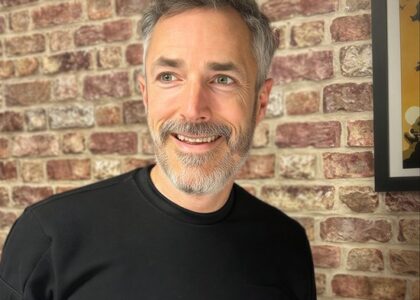
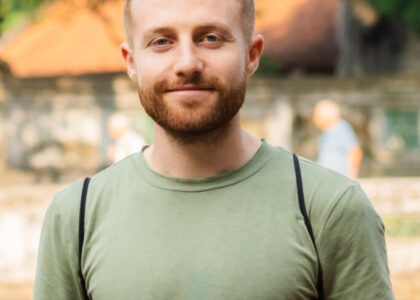
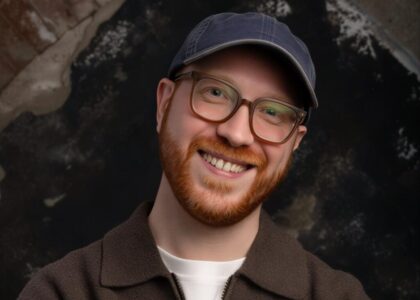
I caught up with Evan Shapiro for our second Bypass Hollywood interview and the timing felt right. A lot has shifted since the last time we talked, and Evan is one of the few people in this business who will say what he actually thinks, even when it makes people uncomfortable. He’s funny, blunt, and weirdly optimistic in a way that still feels realistic.
We talked about getting fired in public, the moment he thought his career was over, how he rebuilt himself as a creator, why “test and learn” is the only game now, and what he thinks is coming in 2026 for Hollywood, big tech, and the creator economy.
For people who aren’t familiar with you, how do you describe yourself and how did you get where you are in your career?
Evan: By accident. I don’t think you could plan the trajectory I’ve taken. I dropped out of college, moved to New York to create stuff, wound up working in administration of the arts, then in TV. I ran a couple of television networks. I produced Portlandia. I started a streaming service for NBCUniversal Comcast Cable Town. They fired me after they decided it wasn’t going to matter as much as they thought it would. Since then I’ve been out on my own. I had to make a hard pivot, and that’s when I decided to go back to creating. But instead of writing entertainment, I decided to turn data into entertainment. That practice took off when I dropped the map of the media universe almost six years ago. People started calling me the media cartographer and it blew up from there.
When you got fired and it was written up in the trades, how did that feel?
Evan: It sucked. It hurt. When your mother gets to read about your firing in the trades, that’s brutal. That day I thought my career was over. It’s hard not to take it personally. It’s hard not to feel like you’re a failure.
But it’s complicated because I’ve always chosen authenticity as a watchword, long before it was cool. I do choose my battles more wisely today, but I never shied away from speaking the truth to power. When you become known for who you are, and then you get fired, people know about it.
In my case it happened at Comcast and before that at Participant Media. Participant was hard on everyone. NBC was the classic corporate media story. Leaders love disruption from the outside. When disruption comes from inside, when the disruptor is in the house banging on the door saying you’re not moving fast enough, they rally to protect their fiefdoms. They got tired of me yelling and asked me to leave.
What helped you recover from that moment when you thought your career was over?
Evan: I married really well. My wife is my partner in everything. We share everything. When I was feeling bad about myself and had the revelation that I wanted to go back to the root of why I moved to New York in the first place, she was like let’s start an LLC. Let’s go. I’m there. I got your back. That support enabled me to pick myself up, dust myself off, and try something adventurous and new.
It was hard at the start. Eat what you kill is real. Putting on a new hat is hard. But I stuck with it. I made rules for myself. I never let myself off the hook. I measured my success daily. After a couple of years it started to matter, and that’s the trajectory I’m on now.
If you could talk to the Evan back then, what would you tell him?
Evan: Get over it. Get over the anger. Get over the emotion. It isn’t personal.
These business leaders who are still in charge today, many of whom were in charge when I got pushed out, they don’t understand how lucky they were. They stepped in the pile of shit at the right time and thought they were geniuses because the ride kept going up and to the right. David Zaslav, Brian Roberts, I can go down the list. Now their ideas don’t work anymore and you can see the slow moving disaster swirling around us. They’re all rich, they’ll be fine.
The move is to keep learning. Wake up stupid every day. Read something. Learn something new about something new every day. Challenge yourself to reinvent what you think. If you’re right, fine. If you’re wrong, prove yourself wrong so you can be right.
When someone says Substack, go learn Substack. When someone says creator, go learn to be a creator. When someone says retail media, learn retail media. When someone says Brazil and they want you to talk about Brazil, go learn Brazil. Don’t take it personally. Learn what you need next. Then you get back out ahead. The people who stop learning fall behind.
What practical advice do you have right now for people trying to build something sustainable?
Evan: First recognize that micro dramas are the hottest thing in the world right now. When I gave that earlier advice, I had no idea that was coming, but it proves the value of test and learn.
The traditional content sales market is the worst of my career. This isn’t a short recession dip. This is structural. There are fewer buyers, fewer hours being made by big studios, and more money moving to sports and mergers. The buyers are winnowing.
So the advice is build a community of people who love your stuff. The professional buyers are buying less, but there’s a whole new collection of buyers. The human race. You have to learn how to sell directly to them.
World of Wonder, the team behind RuPaul’s Drag Race, put it perfectly. Be more like a drag queen. Drag queens do everything. Writers, creators, marketers, producers, promoters. That’s the mode now.
You can sell through subscriptions, or build an audience and sell ads, but you have to understand who your content is for, go directly to them, create an indelible relationship, then build an economic model around that community that matches what they’ll pay and what you need to live and keep making your work.
I don’t have a hundred million followers. I don’t even have a million. But I have an audience and I have full share of that audience, and people in the industry want that.
If someone is created scripted content online and nothing is happening yet, how do they build a real community?
Evan: Find your tribe. If you’re an animator, there are whole pockets of TikTok where people draw and do character studies all day. Wade into that community and learn how it works.
Also, get help. When you do a contract, you go to a lawyer. When you do taxes, you go to an accountant. When you build a community, find a community manager. Hire a community manager or a social media expert, even an intern, to close the knowledge gap.
And keep the test and learn mentality. Not all my posts score. It’s not just LinkedIn. I run a Substack newsletter and monitor it religiously. I post on TikTok every day. I post on Instagram every day. LinkedIn is my core platform. Not all of it works. Failures hurt my feelings, but I get over it. I look at what works and repeat it. I stop doing what doesn’t. Sometimes the audience is telling you no and you have to accept no.
Be persistent. Use experts. That gives you better odds.
Tell us about your feature film. What is it and how did it happen?
Evan: The film is called Skit. It’s about three young women in 2007 trying to make a viral YouTube video, back in the early days of YouTube. It launched on Tubi November 14 and now it’s wide. It’s on YouTube, Amazon, and more. It’s also in YouTube Movies and TV.
My company is small, but almost everyone who works for me was a film student or a creator. I teach them how to turn the business into an art. That group brought me the script about a year and a half ago.
I told them if we make it under creator rules, hire only creators, make it for very little, and avoid the Hollywood machine, we can jump a wave. I set a budget of fifty thousand. They went fifteen thousand over, so it was sixty five thousand.
They cast creators and comedians. It was a union production under the SAG ultra low budget contract. The director and co writer got his parents’ house for the location. We shot in eight days. We were budgeted for ten.
We finished post in March. Then we took it out. In the meantime, Tubi hired Rich Bloom as head of creators, and suddenly everybody had a creator strategy. We partnered with Filmhub because they understand the AVOD ecosystem and they release about five hundred titles a month. They also have a strong partnership with Tubi.
We built a fully fleshed out marketing campaign that was meta, a film about creators, made by creators, for creators. I promised I’d support it with my writing and podcast. Rich Bloom came on the podcast and said one reason they chose the film was that marketing campaign we walked in with.
We launched on Tubi November 14 in an exclusive window. Today it went wide, so it’s on YouTube and Amazon and a bunch of other platforms. It’s in YouTube Movies and TV, which is massively underutilized by creators even though consumers love it.
This crew got a movie made and got worldwide distribution in less than a year. It’s rare. It’s career changing. It’s going to break even or better. That changes how the industry sees you. It’s been a fun journey and I got to work with my daughter on it, which has been terrific.
What’s it like working with your daughter?
Evan: I’m a great boss. We run a family business with my wife. I love going to Europe and seeing family businesses where generations work together. I rail about nepotism a lot, but there are good nepo babies. Jane Fonda. Rob Reiner. He worked his ass off and didn’t take it for granted.
My daughter and I have a great working relationship. She takes my notes well. I take her notes well. She tells me when I’m not right and I listen. I tell her when she’s not right and she listens. We’ve made each other better.
Now that you’ve gone through this independent feature film process, what would you do differently next time?
Evan: On this one, I don’t know that I’d do anything differently. I’m not trying to go back to producing TV shows and films as a career. My primary business is the stuff I make now, silly little phone videos, maps of the media universe, Substack, social writing.
This film was a passion project with a specific purpose, and I gave the young creators full power. I wasn’t on set. I gave notes on the script and edit, but my fingerprints aren’t all over it. It’s their project. The fact that both sides walked away feeling successful is the win.
I love my current state of creativity. It’s the most enjoyable thing I’ve ever done. I wake up every day and do what I want. Most of the time it works. When it doesn’t, I learn. I’m iterating myself daily. I encourage everyone to do the same. Iterate yourself. Test and learn. Lean into what works. Learn from what doesn’t. Be persistent. Grow a thick skin.
What are your predictions for 2026? What do you want to happen and what do you think will happen?
Evan: What I’d like to happen is Apple buys Warner Bros. Discovery. Apple needs WBD and WBD needs Apple. That would cause the least damage. HBO survives. Other brands survive. It’s two parties that benefit from getting together.
What I think will happen is we watch it play out like a slow motion disaster all year. Paramount or Netflix or someone ends up with Warner Brothers and it creates more damage. More people lose jobs.
What I’d like to happen is traditional media learns how to transform by listening to data. The New York Times is the case study. Everybody should study it and read Mark Thompson’s exit interview where he explains how that transformation happened. That’s the blueprint for the least damage and most success.
What I think will happen is traditional media keeps believing they’re geniuses and we watch the demise continue. Big tech takes more authority and power in entertainment. Five years from now we’ll be in a totally different ecosystem.
I also think the AI bubble is going to burst. You’re watching billionaires sell Nvidia shares. They know things we don’t. That bursting will damage the economy and job market, including media.
But I also think, and I want this to happen, that big traditional media brands and publishers finally stop fighting the creator economy and join it. Disney will embrace YouTube more. Warner Brothers will embrace it once they get through what they’re going through. You’re already seeing BBC and ITV move toward it.
The creator economy becomes a place where studios and brands operate alongside creators. YouTube becomes a true broadcasting platform. Instagram next. TikTok after that. Those platforms end up on television within a year, or shortly after in 2027. We’ll finally find the new version of broadcasting the industry has been searching for.
That merging of traditional media and the creator economy, I call it the affinity economy. I think it becomes real in 2026, and by the end of next year we’ll see the green shoots of the transformation.