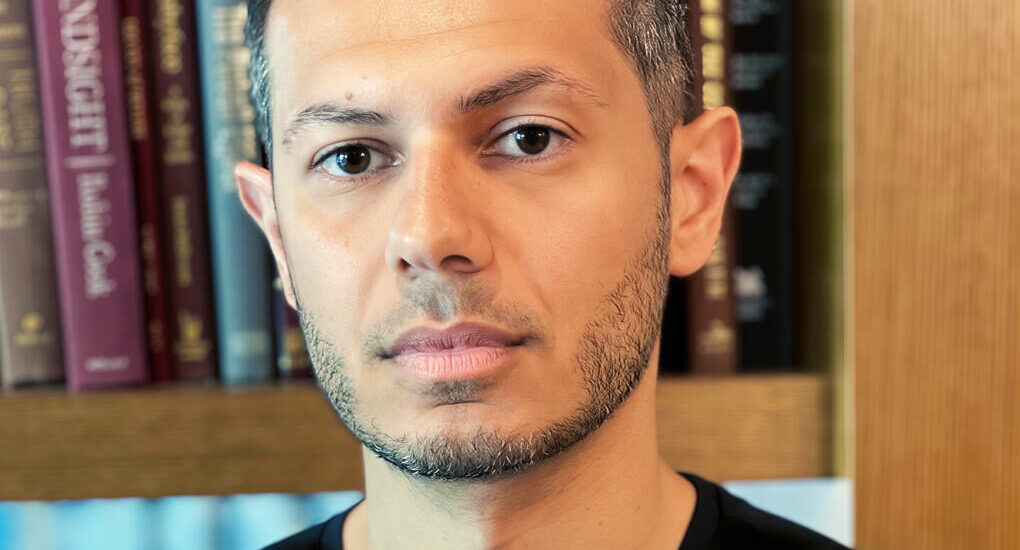
Davide Bianca
Co-Founder & Chief Creative Officer, GRAiL
Davide Bianca has lived inside the traditional studio system. He’s pitched in the boardrooms. Supervised VFX. Helped package shows. Built worlds for brands. Watched brilliant ideas die because someone across the table couldn’t see what he saw.
Then generative AI arrived.
He didn’t see it as a gimmick. He saw it as a weapon for storytellers.
So he built GRAiL — an AI-powered entertainment studio and management company designed to give the next generation of filmmakers leverage instead of permission.
Davide, for those who don’t know you, tell us about your background and how GRAiL was born.
I’ve worked across the entire production pipeline — screenwriting, directing, VFX supervision, character design, packaging shows, experiential activations at Comic-Con, brand campaigns, you name it.
The common thread was always the same. Incredible ideas would die in executive meetings because the person across the table simply couldn’t visualize the pitch.
When the first alpha version of Midjourney dropped, I immediately connected the dots. Suddenly you could show the vision instead of describing it. I started tinkering, then The Coca-Cola Company knocked at the door.
That was the inception moment for GRAiL.
Jeff Krelitz and I founded it with a simple idea: build a home for the next generation of filmmakers who understand both storytelling and technology. Not AI artists who just learned prompts yesterday — real storytellers who’ve embraced the tools to push the craft forward.
What makes GRAiL different from a traditional production company?
We are a four-legged stool, four pillars.
Original and adapted IP. We develop our own slate across episodic, short form, long form, and licensed properties.
Services. Pre-production through post for studios, streamers, and Fortune 500 brands.
Advertising. Brand storytelling for agencies and direct clients.
Management. We represent about 15 of the top 20 AI-native filmmakers globally — filmmakers first, AI second. People who understand blocking, coverage, pacing, performance, story.
Think of what Propaganda Films was in the 90s. Fincher. Gondry. Spike Jonze. Michael Bay. They came from outside the system and redefined it.
We’re asking what that ethos looks like now.
You were early in AI filmmaking. Did the backlash surprise you?
The scale of it did.
Every transformative technology has its “fork moment.” Digital photography. Photoshop. CGI. But AI hit during the amplification era of social media. So the vitriol was louder.
There’s a paradigm shift happening. Studios. Unions. Creators. Everyone has to recalibrate.
But we’ve stayed focused on one thing. Unlocking access, not restricting it, and elevating craft and taste.
We’re not AI purists. We’re storytellers using tools.
If a 10-year-old can now generate cinematic footage, how does a serious filmmaker stand out?
Pretty pictures are not story.
The tools are accelerating insanely fast. Two years ago none of this existed. But the fundamentals haven’t changed.
What moves people?
Suspense versus surprise. Character versus spectacle. Is the story worth telling?
If the answer is no, no tool will save you.
The more powerful the tools get, the more important voice becomes. Unique perspective. Emotional resonance. That’s what survives.
Toy Story wasn’t revolutionary because it was CG. It was revolutionary because it was great.
You’ve built multiple revenue streams at GRAiL. If I’m a filmmaker trying to leave my day job, where do I start?
Advertising.
It’s a fast track to learning the business. Production cycles are shorter. You understand briefs, client dynamics, budgets.
Many great directors came through advertising. Ridley Scott. Michael Bay.
And here’s the shift. Brands are no longer limited to 30-second spots. They’re building ecosystems. Episodic branded storytelling.
With production costs dropping, brands can finance narrative experiments to prove a use-case and then deploy at scale across markets.
We’re moving back toward a 90s-style indie model where brands partially finance stories — not by slapping logos everywhere, but by integrating organically.
That becomes your runway.
Build an audience. Build leverage. Retain IP.
Markiplier crowdfunded a $3 million film that opened to $48 million. That’s not theory. That’s execution.
Where do you see the industry in two years?
By late 2026, animated AI-driven episodic content will be somewhat normalized.
Hybrid production will increase. Limited principal photography combined with AI-enhanced scale. TV will adopt faster than theatrical which will trickle down in 2027.
Actors licensing likeness and voice will become more standard. Passive revenue models will emerge.
Unions will evolve. They have to.
The real shift is this. Projects previously deemed too risky or too expensive will get made.
And the pace of innovation makes prediction almost pointless. Every month something impossible becomes possible.
That’s the thrilling part.
If someone wants to work with GRAiL, what should they do?
Reach out.
We’re constantly scouting new talent. We’re in the business of doing cool work with cool people.
If you’re serious about story, serious about craft, and willing to embrace evolution — we want to hear from you.
www.welcometograil.com or @welcometograil on LinkedIn and Instagram.